Joe Cordray, Ph.D. — Iowa State University
Dr. Joe Cordray, a professor and extension meat specialist at Iowa State University, is responsible for the dissemination of information on Meat Science and Meat Technology (including sausage manufacture, sanitation, food safety and HACCP, carcass fabrication, carcass evaluation, livestock harvest, merchandising, packaging, product handling, storage, business sustainability and food defense) and coordinating meat science and technology short courses for both domestic and international meat industry personnel. He has taught thousands of meat science students and industry personnel with his courses.
Apart from his teaching duties, Dr. Cordray has also written for several industry publications, most recently the Independent Processor, which has published his columns for the last nine years. He has delivered more than 100 presentations to meat processor groups or organizations and is a regular presenter at industry trade shows. Dr. Cordray is also a technical advisor to the American Cured Meat Championships, held every year in conjunction with the annual AAMP Convention.
For his service to the industry, he has received awards from numerous associations, including the American Meat Science Association, American Association of Meat Processors, North American Meat Processors (now North American Meat Institute) and many state associations.
For more than 40 years, Dr. Joe Cordray has been an invaluable resource for those in the meat industry or students interested in joining it. With his positions in the academic world, writing for industry publications and working for industry supplier A.C. Legg, Dr. Cordray has helped processors improve their products, find new market niches, keep aware of industry issues or policy changes and generally become more successful. It would be practically impossible to calculate the number of companies he has advised or the number of individuals he has taught, mentored and brought into the industry.
Chuck Hendryx — H-E-B Grocery Co.
Two descriptions consistently surface when people talk about Chuck Hendryx: innovator and humanitarian. His innovations and his philanthropic efforts continue to benefit H-E-B. The stores of this privately held retailer sell more meat sales per square foot than any other retailer in this country.
In the early 1970’s HEB was still breaking beef and pork carcasses in stores and selling whole and store-cut bone-in chicken parts. Because of Hendryx’ experiences in the Kroger company, where he led the development of the Carcass-to-Box retail program, he knew that moving to boxed-beef and chill-pack chicken could drive sales and efficiencies. At HEB, Mr. Hendryx led the design and build out of the first retail case-ready facility in the Southwest and staffed it with store-trained meat supervisors working with the first “skin-pack” machine prototypes available. He is credited with recognizing that portioned, vacuum-packaged meats held significant benefits for customers. Never one to rest on his laurels, he expanded offerings into seasoned and marinated meats. The profiles for HEB Beef and Chicken Marinated Fajitas are still on shelf and remain top sellers.
Since his retirement, he has extensively consulted with both domestic and international companies to introduce the latest merchandising and marketing concepts for a sustainable, customer-driven meat business.
Mr. Hendryx has always been community minded. While working at H-E-B, he was instrumental in creating the H-E-B Tournament of Champions charity event which began in 1986 and is still in operation today. Over its 30-year history, the tournament has raised more than $80 million for organizations that focus on children and education throughout the State of Texas. Chuck’s leadership, foresight, big heart and continued involvement in this effort has made a huge impact on the lives of children and their families across Texas.
He has received numerous awards in recognition of his outstanding work and extraordinary service to the meat industry and his community. He served as co-chairman of the Annual Meat Marketing Conference sponsored by AMI, FMI and FDI. The American Meat Institute honored him with their Lifetime Achievement Award presented at The Meat Marketing Conference.
Sam Kane — Sam Kane Beef Processors
(1919-2010)
Sam Kane was born to Leopold and Berthe Kanengiesser in Spisske Podhradie, Czechoslovakia, One of 12 children in a Jewish Orthodox home, he graduated from Rabbinical College in Galanta and helped his mother run the family grocery store after his father’s death.
In 1939, Hitler rolled his armies into Poland and it wasn’t long until they took over Czechoslovakia, segregating Jews. Kane joined the Slovakian army in 1942 along with his brother, Bernard, and was placed in a segregated unit of 1,000 Jews. He deserted a few months before his two-year enlistment ended, escaping to Hungary for three months and made a living selling porcelain and glass items.
In 1945, Kane married Aranka. The couple immigrated to the United States in 1948, after the Communist Party came to power in Czechoslovakia. “We had relatives in the area who sponsored us,” Jerry Kane said. “My dad didn’t speak English and worked as a plumber’s assistant, but his pay didn’t cover the rent.”
Kane decided to pack his family and leave Corpus Christi to find better opportunities, but a conversation with the ticket agent at the bus stop changed that plan.
Getting his start running a small meat counter in a grocery store, he learned the trade and began custom-cutting meat and eventually grew his small business into the seventh-largest meatpacker in the world, according to his son Jerry Kane.
Kane introduced grain-fed beef to South Texas, a concept he took from beef producers in Denver. The product was a boon for his business.
He was a hard worker and a firm believer in God, his son said. His daily life as a young adult was about faith, he added. Businessman Robert Adler knew Kane for about 60 years, from the time spent at the synagogue and through Sam Kane Beef Processors. “He did so many wonderful things that not everyone knows about,” Adler said. “His legacy would be of service to the community and hard work. He was a rational thinking and an outstanding man.”
Until his last day, Kane always said two things, Jerry Kane said. “He’d say, ‘God Bless America’ and ‘People love beef.’”
C. Larry Pope — Smithfield Foods
C. Larry Pope has served as President and Chief Executive Officer of Smithfield Foods since 2006. He previously served as President and Chief Operating Officer from 2001 to 2006 and Vice President and Chief Financial Officer from 2000 to 2001.
Mr. Pope’s 30-year career at Smithfield spans a variety of senior management roles and responsibilities which bring an in-depth knowledge of the company and the industry and broad experience in operational, finance, accounting and risk management matters. Further, as Smithfield’s CEO, Mr. Pope has expertise in corporate strategy, organizational leadership and international operations. A statement upon his retirement:
“It has been an honor and a privilege to lead Smithfield over the past nine years,” said Mr. Pope when he retired late last year.
“This planned leadership transition comes at a time of strength and growth for Smithfield. 2014 and 2015 have been the two best years in Smithfield’s history for financial performance and I believe the company is primed for ongoing success.
Since February, the Smithfield family has been hard at work implementing our ‘One Smithfield’ initiative aimed at solidifying the company’s position as a global leader in branded packaged meats. During this time, we have unified Smithfield and made the company stronger and more efficient to better support our people, brands and customers. We have also put in place the next generation of leadership to ensure Smithfield’s success long into the future. I am extremely pleased with what we have achieved during my tenure as CEO and think the future is even brighter with the management team that we have put in place over the past two years. As such, I believe now is the right time for me to retire and allow this team to bring new excitement, energy, ideas and perspectives to the company.”
Mr. Pope concluded, “I want to thank the great people we have working at Smithfield for their dedication and loyalty to the company. Your hard work has always been — and will continue to be — the cornerstone of Smithfield’s success.” “Larry has made significant contributions to Smithfield’s development,” said Mr. Wan Long, chairman of the board. “Smithfield has achieved good results under Larry’s leadership. I sincerely appreciate what he has done for the company, and wish him all the best in his retirement.”
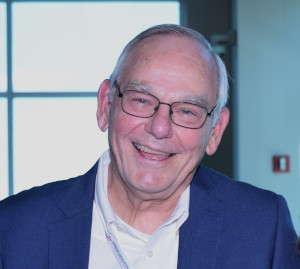
Dr. Joe Sebranek — Iowa State University
Dr. Joe Sebranek has been a truly exceptional teacher, mentor, researcher, and public servant at Iowa State University for four decades. Throughout his career, he has been dedicated to achieving excellence in the major areas that comprise the land-grant mission and that have major impacts on the university, the state and the world.
Dr. Sebranek has published over 300 short articles for extension publications and industry trade magazines. He is an outstanding example of combining highly effective teaching, outstanding research and extensive outreach to fulfill the mission of a land-grant university.
Dr. Sebranek was first recognized for his teaching excellence in 1986 with the Outstanding Teacher Award by the Midwest Section of the American Society of Animal Science. He was subsequently recognized by the ISU College of Agriculture in 1987 with the L.M. Thompson Scholarly Achievements in Teaching Award, and the College of Agriculture Outstanding Teacher Award in 1995. He received the Iowa Legislative Teaching Award in 1990 and the Iowa Board of Regents Faculty Excellence Award in 1994. The American Meat Science Association recognized him with its Distinguished Teaching Award in 1995 and he received the ISU Gamma Sigma Delta Mission Award for Teaching in 2008.
Dr. Sebranek has had a distinguished research career, recognized as one of the world’s most prominent scientists in meat processing technology and food safety. His research on value-added utilization and safety of animal food products has had major impact on the animal food industry.
Dr. Sebranek’s research productivity is evident in 132 peer-reviewed publications that have been cited nearly 1,800 times. He has written 14 book chapters, has testified before Congress on food safety related issues and has been invited to consult with industry and research institutes in the U.S., Canada, Mexico, Europe, Taiwan, Korea and China.
He has served his profession as a member of the Board of Directors of the American Meat Science Association in 1990-1992, President-elect in 2001-2002, President in 2002-2003 and Past-President in 2003-2004. He was Chair of the Iowa Section of the Institute of Food Technologists (IFT) in 1990-1991 and Chaired the Muscle Foods Division of IFT in 1983-1984 and again in 1991-1992. He served as Chair of the Agricultural Sciences Section of the Iowa Academy of Science in 1993-1994.
In recognition of his many service contributions, he has received the Alpha Lambda Delta Service Award (1988), Iowa FFA Service Award (2000), Iowa Meat Processors Service Award (2000), Watt Publishing Service Award (2003) and the American Meat Science Association’s Signal Service Award (2006). He has also been elected a Fellow of IFT (2004) and of the American Society of Animal Science (2006).
Sam Stein — Chef’s Pantry/Sam Stein Associates
(1906-2005)
Sam Stein is one of the true pioneers of the meat industry. He began his meat industry career by working as a teenager for a Youngstown, Ohio food distributor. Sixteen years later, he launched Grill Meats as a one-man business in 1940 with only $23 and an ice cream scoop.
Working at night as a short-order cook, during the day he made and sold pre-formed hamburger patties , which were separated by a thin layer of paper, to restaurants in North Central Ohio. The product line was expanded to include a full range of portion-controlled meats. In the late 60’s, the company’s name was changed to Chef’s Pantry.
During his 40 years in the meat business, Sam expanded and diversified his company into three entities; Chef’s Pantry Distribution, a full-line frozen food distributor; Chef’s Pantry Processing, a processor of frozen meat products and meat-based prepared entrées and Sam Stein Associates, a worldwide manufacturer of food-processing machinery. Following the continued growth of Sam Stein Associates, the company was sold to Bettcher Industries and continues today as JBT FoodTech.
Mr. Stein was President (1962-63) of the National Association of Meat Purveyors (NAMP) which is now an integral part of the North American Meat Institute (NAMI). He led the effort to establish the original annual NAMP Management Conference which continues as a major program within NAMI.
As a founding member of the President’s Professional Association of the American Management Association, he adapted an idea based on his friend, Clarence Becker’s NAMP ‘Bull Session’ and established the concept of sharing best practices. His contributions and service to the meat industry earned him NAMP’s top three awards; the Achievement Award (1960), the Angus Award (1965), and the NAMP Award (1987), all for lasting and significant contributions to the association and the meat industry. Mr. Stein and his beloved wife, Rose, began their philanthropic activities by donating millions of dollars to causes involving the young, the aging and the health care needs throughout Ohio and California. Their philanthropy encompassed thirty-five foundations and organizations with donations of over $50 million to those in need of a helping hand.
Those organizations include:
- The Stein Hospice Service
- Stein Institute for Research on Aging at the University of California, San Diego
- Vista Hills Foundation’s Stein Education Center, with sites for the developmentally disabled throughout San Diego County
- Stein Research Center at Scripps Research Institute
- Stein Emergency Care and Ambulatory Care Centers at Childrens’ Hospital
He also served as President of the Board of Directors at Good Samaritan Hospital in Sandusky, and at Scripps Health Services in La Jolla, CA. In 2002, Palomar Pomerado Health Foundation recognized Sam for his efforts in funding services at Pomerado Hospital and nearby Villa Pomerado, naming him “Philanthropist of the Year” for all his efforts and had a sign made that reads “Sam & Rose Stein Way” posted on hospital grounds as a tribute to the couple’s generous support.
Clayton Yeutter — USDA
(1930-2017)
Clayton Yeutter changed the world. He served two presidents in three Cabinet-level posts – U.S. Secretary of Agriculture, U.S. Trade Representative, and Counselor to the President.
With an unusually strong grip (once the “strongest grip” ever recorded in the White House gym), he shook hands with world leaders and helped shape historic trade agreements. He pried open world markets for U.S. beef, which helped farmers and others back home.
The day President Reagan asked him to become the U.S. Trade Representative, his first Cabinet-level post, Clayton phoned his mother with the big news (his father had died by that point).
He told his mother that he was calling from the White House. He waited for her praise. Instead, there was just silence. Dead silence. For 10 seconds or so. Then she finally spoke. How long do you have to do that job? That was also the day when Ronald Reagan’s chief of staff, Don Regan, while escorting Clayton out of the White House, told him something that he really took to heart: “Your job is to change the world.”
This past year, UNL announced its plans to create the Clayton K. Yeutter International Trade Institute. Its goal is to endow faculty positions in business, agriculture and law that are committed to building a strong international dimension into their teaching and research programs.
The secondary goal is to give University of Nebraska students the international orientation and background they’ll need in preparing for the jobs of the future. “You only spend so many years on this Earth,” he said last August, one day after making that trip home. “The question is: What do you do with them? Can you do something that will help the next generation coming along?”

