Dell M. Allen, Ph.D. — Excel Corp.
Dell Allen was responsible for coordinating all Total Quality Management and Training company-wide, Quality Assurance for beef and pork and the Customer Service Department at Excel Corp. He served as Food Safety Coordinator for the entire Cargill Meat Sector. His insistence on bringing meat science and the meat business together has greatly benefited Excel and the entire meat industry.
Mel Coleman Sr. — Coleman Natural Beef
(1935-2023)
Mel Coleman was not only a pioneer in raising hormone- and antibiotic-free cattle, especially after the DES controversies surfaced in the mid-1970s, he also promoted sustainable production practices throughout his career. When rotational grazing first emerged, Coleman was one of the first ranchers to work with the U.S. Forest Service to implement the program.
Louis “Mick” Colvin — Certified Angus Beef
‘Mick’ Colvin, CAB Executive Director for 21 years, took the concept of identifying and marketing beef with consumer-focused quality specifications to a worldwide brand. CAB product became the benchmark for quality within the food industry and a catalyst for consumer-driven approaches to cattle production and beef marketing. During 2008, 634 million pounds of CAB products were sold to consumers throughout the United States and in 45 other countries.
H. Russell Cross, Ph.D. — Texas A&M University
Dr. H. Russell Cross has more than 35 years of scientific and management experience, one of the few people anywhere in the industry to hold positions of significance – and accomplishment – in government, academia and the private sector. He had a significant influence on meat safety during his tenure as Food Safety and Inspection Service Administrator under Presidents George H.W. Bush and Bill Clinton and later working as a food-safety educator and innovator.
Jimmy Dean — Jimmy Dean Sausage Co.
(1928-2010)
Jimmy Dean was one of the consummate American entertainers of the 1950s and 1960s: He was one of the very few celebrities who successfully launched a food company that not only traded on his fame but actually became a category leader in its own right. By 1972, Jimmy Dean Sausage had opened a new plant in Osceola, Iowa, and Dean took a more active role in marketing and operations. By 1984, when he sold his company to Sara Lee, the Jimmy Dean brand was the No. 1-selling breakfast sausage.
Paul Engler — Cactus Feeders
(1929-2024)
Paul Engler was instrumental in shaping the modern cattle feeding industry. He is most recognized as founder and chairman of Texas-based Cactus Feeders, the largest privately owned fed-cattle producer in the United States. Engler devoted his career to improving beef production practices. He has been characterized by colleagues and competitors alike a man whose leadership and vision has fueled much of the industry innovation that is still evolving today.
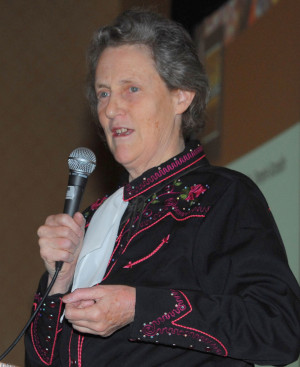
Temple Grandin, Ph.D. — Colorado State University
Temple Grandin used her unique ability to “see” the world as animals do to launch a successful livestock handling equipment design firm responsible for facilities in which half of all U.S. cattle are handled and consulting for such firms as Cargill, Swift & Company, Burger King, McDonald’s and others. She consults and speaks around the world on both autism and animal-handling issues and is author of the seminal books “Animals Make Us Human,” “Animals in Translation,” and “Thinking in Pictures.”
Donald L. Houston — FSIS/APHIS
(1934-1988)
Houston was born in East St. Louis, Illinois, on September 14, 1934. After receiving his bachelor’s and Doctor of Veterinary Medicine degrees from the University of Illinois, Dr. Houston served as a captain in the U.S. Army Veterinary Corps from 1959 to 1961. He then joined USDA as a veterinary meat inspector in East St. Louis.
Houston moved to Washington, D.C. in 1965 and held various positions within the inspection service until 1979, when he was appointed administrator of the Food Safety and Quality Service, the predecessor of FSIS. He held that post until October, 1987, when he was named administrator of USDA’s Animal and Plant Health Inspection Service (APHIS). His distinguished career was cut short by cancer; he died on February 19, 1988, after a brief illness.
Upon Dr. Houston’s death, tributes poured in from prominent government and industry officials, including Carol Tucker Foreman, Dr. Sanford Miller, Rosemary Mucklow, and U.S. Representatives Charles Stenholm, Kika de la Garza and Pat Roberts.
SERVICE/AWARDS
- Diplomate of the American College of Veterinary Preventative Medicine; member of the American Veterinary Medical Association, American Association of Veterinary Hygienists and the National Association of Federal Veterinarians; and U.S. Representative to the Codex Committee of the United Nations
- Twice received the highest awards given by the U.S. Government to career Federal officials, the Meritorious Executive Rank Award in 1980 and the Distinguished Executive Rank Award in 1984. Also received USDA’s highest recognition, the Distinguished Service Honor Award, in 1982.
- Dr. Houston was cited numerous times for his efforts to promote opportunities for women and minorities in the Federal government. He initiated the Executive Staff Officer training program and the Career Development Program for Women.
- The Donald L. Houston Building at Texas A&M University was named for him.
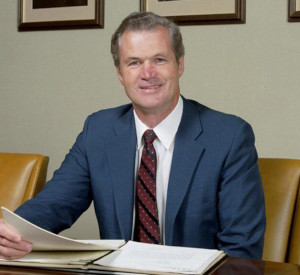
Richard L. Knowlton — Hormel Foods
(1932-2019)
Dick Knowlton was born on June 9th, 1932, in Austin, MN. He came from a family of seven children with little money but lots of love. His father worked for the Hormel Company weighing livestock. Dick started working at Hormel at the age of 16 performing a variety of jobs throughout the Austin plant.
Dick’s athletic skill earned him a football scholarship at the University of Colorado in Boulder, where he majored in geography and economics. Summers found him working for Hormel and upon graduation from college he took a job with Hormel. He met the love of his life, Nancy VanDerbur, while at CU. They married November 3, 1954 and spent 2 years in the Air Force at Spokane, Washington, where Dick served as an Intelligence Officer.
Dick worked 62 years at Hormel starting in the hide cellar and ultimately serving as President, CEO and Chairman of the Board of Hormel Foods Corporation and Chairman of the Hormel Foundation.
Dick Knowlton managed Hormel Foods to consistent profitability and propelled the company into the future by spearheading a company-wide emphasis on development of value-added, convenient food products. In one 18-month period in the late 1980’s, Knowlton spurred Hormel to introduce 134 new products. On his watch, Hormel acquired turkey processor Jennie-O Foods and Chi-Chi’s brand line of ethnic and Mexican foods, vastly expanding the company’s shelf presence, market share and top and bottom lines.
Joseph Luter III — Smithfield Foods
(1939-2025)
Joseph Luter took over the family business in 1975 with the company was in severe financial distress. At the time, the company had sales of $115 million, debts of $20 million, a net worth of less than $1.0 million and stock that was trading as low as 50 cents a share. He pioneered vertical integration in the early 1990’s. In 2000 Smithfield became the world’s largest producer of hogs. Today’s Smithfield is a multi-national company with major operations in France, Poland, Romania and Mexico.
Richard E. Lyng — USDA/American Meat Institute
(1928-2003)
Richard “Dick” Lyng was named AMI President in 1973, a post he held until 1979. He served as Secretary of Agriculture under President Ronald Reagan from 1986 to 1989. During his term, he dealt with many pressing farm issues, including a devastating 1988 drought, for which he helped push a $4 billion relief bill for farmers and livestock producers through Congress.
Kenneth W. Monfort — Monfort Inc.
(1928-2001)
Ken Monfort was one of the first to begin fabricating beef right at the plant, a radical departure from the norm of shipping “swinging beef” to retailers or butcher shops. He spearheaded the evolution of his company into a vertically integrated corporation involved in feeding cattle and lambs; running a meatpacking plant and fabrication operations for restaurants, institutions and supermarkets; and transporting and distributing its products to customers.
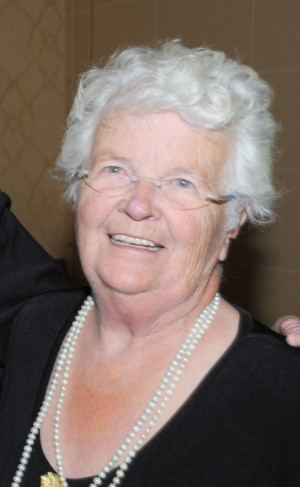
Rosemary Mucklow — National Meat Association
(1932-2026)
Rosemary Mucklow began her career in the meat industry as a stenographer at a small San Francisco trade group, the Pacific Coast Meat Jobbers Association — later renamed the Pacific Coast Meat Association (PCMA). She would go on to lead that organization as its executive director for the next two decades.
In 1982, the PCMA merged with the Western States Meat Packers Association to form the National Meat Association (NMA), and Mucklow was named executive director — a position she held until 2007. Under her leadership, NMA became a leading voice for meat packers and processors on regulatory and business issues in Washington. When NMA later merged with the American Meat Institute to form the North American Meat Institute (NAMI), Mucklow continued her association with the industry as NAMI’s Director Emeritus and a consultant, a role she held into her final years — capping a career that spanned more than 55 years in the meat business.
Her contributions were recognized widely across the industry. In 1996, Rosemary received the E. Floyd Forbes Award presented by the National Meat Association in recognition of her outstanding services to the meat industry. In 2015, the U.S. Meat Export Federation honored her with its Mansfield Award, given in recognition of individuals who champion U.S.-Japan trade ties, for her decades of work helping place American meat on international markets.
Her passion for the next generation of meat industry leaders helped to create a scholarship foundation that continues to fund deserving students.
Earl Olson — Jennie-O Foods
(1915-2006)
Olson started Jennie-O Foods in the 1940s when he was a Minnesota entrepreneur and part-time turkey grower. He served as President and CEO of the company until 1974, when he became Chairman of the Board. His forward-thinking was perhaps best expressed in the development of the Jennie-O Turkey Store, the industry’s most extensive line of further-processed products and one of the pioneers in providing value-added turkey year-round to American consumers.
Frank Perdue — Perdue Farms
(1920-2005)
Frank Perdue started his first processing plant in 1968, making Perdue Farms one of the earliest integrated poultry companies. It gave him the opportunity to do something never been before done: put his name on what had been formerly a commodity product. Perdue Farms became the nation’s No. 3 poultry company, with more than 20,000 associates, operations in 15 states and production of more than 50 million pounds of poultry a week.
Robert L. Peterson — IBP Inc.
(1932-2004)
Bob Peterson was named IBP’s Chief Executive in 1980 and Chairman in 1981. He was instrumental in re-shaping the economics of the entire meat business. During the 1970s, he turned the company’s innovative “Cattle Pak” boxed beef concept into the industry standard. Peterson lead the way to centralizing slaughter, fabrication and vacuum packaging at a single plant, and in the 1980s, spearheaded a similar high-volume, streamlined breaking and packaging process in the pork industry.
Phillip M. Seng — U.S. Meat Export Federation
Philip Seng oversees U.S. Meat Export Federation operations worldwide, providing direction for USMEF strategies and priorities in international programs, research, technical services, industry relations and global communications. He also serves as the primary spokesman for USMEF and other exporting interests to government and private entities regarding international trade policy and foreign market development issues.
Gary C. Smith, Ph.D. — Colorado State University
Dr. Gary C. Smith occupied the Monfort Endowed Chair in Meat Science at Colorado State University in Fort Collins from 1990 until his retirement in 2010 . In addition to his many honors, he has devoted his time to industry associations and to many companies in the meat industry as a speaker, consultant and expert. A scientist of note, he is also an accomplished researcher, a gifted teacher, and a legendary mentor to literally dozens of academicians and technical specialists throughout the industry.
Lawrence D. Starr — Koch Equipment LLC
(1932-2004)
Lawrence Starr turned Koch Equipment into a world-leading supplier of food processing and packaging equipment. He was recognized as a pioneer in introducing vacuum packaging technology in the United States, but his global vision led him to focus on international opportunities, and Koch eventually built meat-processing facilities in the former Soviet Union, Poland, Hungary, the Czech and Slovak Federal Republics, China, Micronesia, Trinidad and Mexico.
Raymond T. Townsend — Townsend Engineering
(1913-2011)
Ray Townsend founded Townsend Engineering in 1946 as a meat and food processing equipment manufacturer. Over the next three decades, Townsend’s inventions were legendary, including the Frank-A-Matic and the Automatic Sausage Linker, which revolutionized the production of skinless frankfurters and became an industry standard. Townsend’s company became the largest designer and manufacturer of skinning, stuffing and injection machinery for meat, poultry and seafood processors worldwide.
Donald J. Tyson — Tyson Foods
(1930-2011)
Don Tyson was named president of Tyson’s Foods, Inc. in 1966, and president and CEO in 1967. He led the company through a period of major expansion, largely via acquisition. Renamed Tyson Foods in 1971, the company entered the hog production business the following year and became America’s largest hog producer by 1977. Tyson Foods became the nation’s No. 1 poultry processor in 1986.

